Dhvani Patel Flat Feet in Kids · Case Study
← Back to Projects Next Project: TUSK →

Detecting flat feet before they become a lifelong problem.

An early screening system for detecting flat feet in children aged 4–6.
Focus
Pediatric foot health
Deliverables
Measuring device · Companion app · Sensor materials
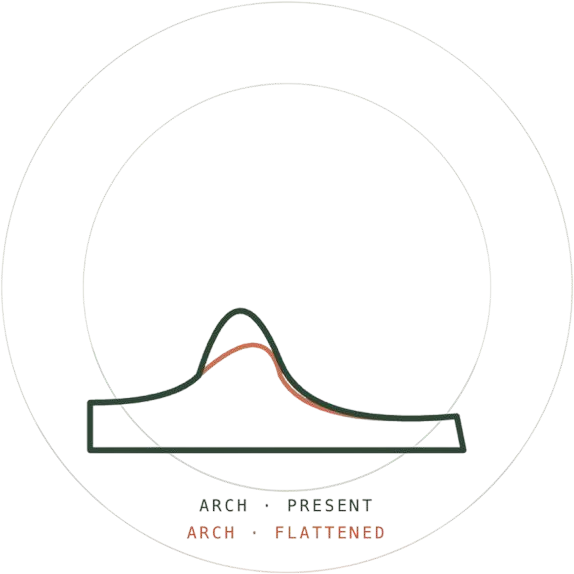
Diagram comparing a present arch versus a flattened arch profile
01 — Why this matters

Flat feet are common, quiet, and easy to miss.

As a child’s arch collapses and the foot rolls inward, the misalignment can affect posture, movement, and mobility — often causing fatigue no one connects back to their feet. At four to six, arches are still developing, so the signs are easy to wave off as a normal stage of growth.

What if routine pediatric screenings could detect it earlier?
Field data · age 3–6 54% 24% AGE 3 AGE 6

Illustrative figures from our research phase. Flat-foot signs trend downward as arches develop naturally — exactly why the cases that don’t resolve are so easy to overlook.

02 — Getting close to the problem

Three vantage points: parent, teacher, pediatrician.

We mapped the problem across the people who see it first, then went and watched kids move.

Parent↓ worries
Teacher↓ notices
Pediatrician↓ diagnoses
WHO

Parents worry. Teachers notice. Pediatricians diagnose.

WHAT

Balance, coordination, and endurance are affected.

WHERE

Most visible during play.

WHEN

Often overlooked during early childhood.

WHY

Early detection supports healthier movement.

From the playground
1 in 3 children

Observing 25 children during play revealed that nearly one-third showed visibly flattened arches — none of which had been previously identified.

From the living room

Signs nobody named

Parents described recurring signs — uneven shoe wear, avoiding active play — but rarely connected them to flat feet.

03 — What we learned

Four insights shaped the brief.

Footwear gap

Arch support comes too late

Supportive footwear usually shows up only after symptoms do, missing the window for early intervention.

Self-limiting play

Children adapt before they complain

Rather than voicing discomfort, kids quietly change how and where they play.

The ripple effect

The impact goes beyond the feet

Flat feet can influence posture, balance, and movement as children grow.

The blind spot at home

Early signs are easy to dismiss

Symptoms show up at home but read as a normal part of growing up.

04 — Choosing the right form

Ten directions, three finalists.

We diverged wide — smart socks, sensory mats, augmented-reality scanners — before converging on a format parents already trust.
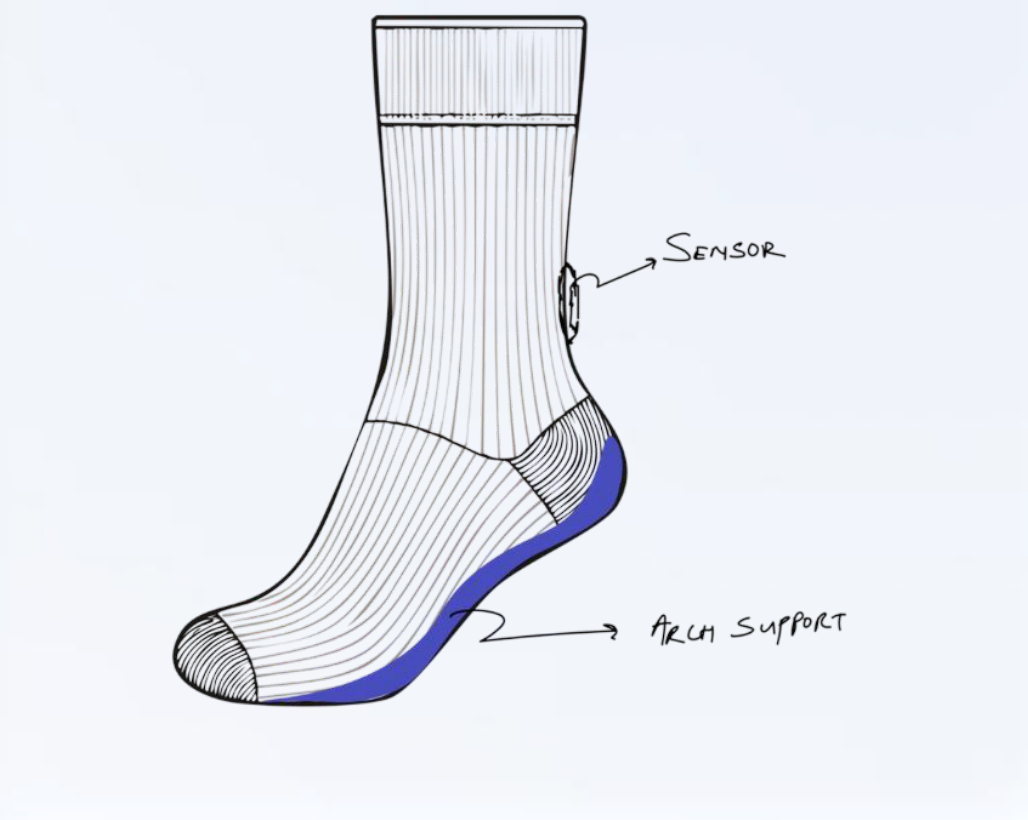
Sketch of a sensor sock concept with an arch-support zone and embedded sensor
Sensor socks
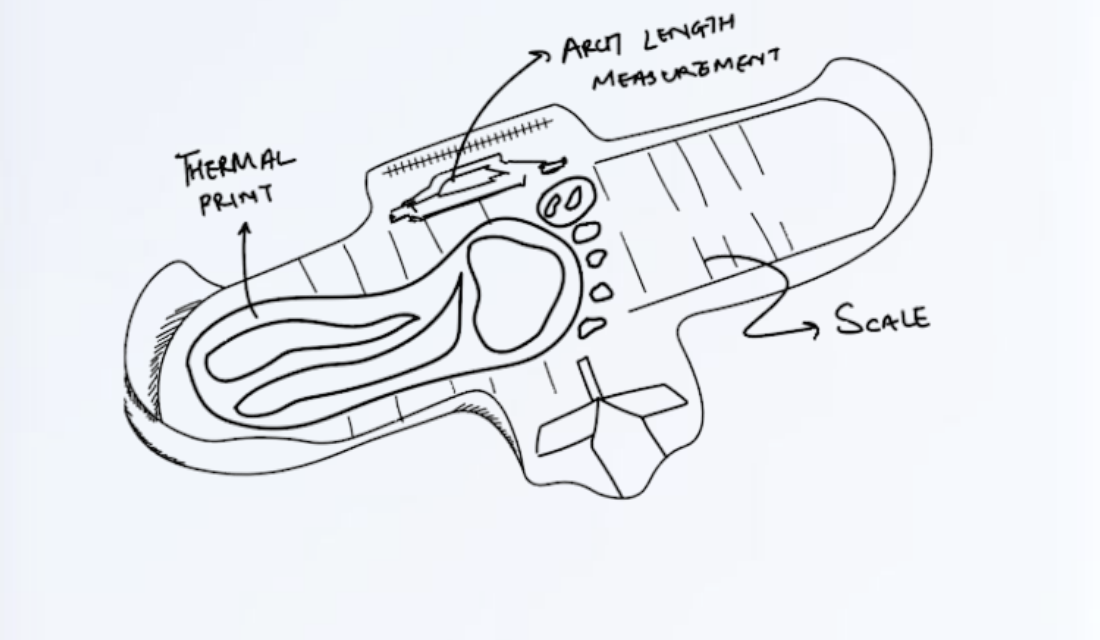
Sketch of a foot-length measuring device with thermal print and scale annotations
Foot length measuring device
Sketch of a pressure-sensing mat with varied textured zones
Pressure-sensing mat

From many possibilities, to one familiar format.

Parents already trust the height-and-weight check. That familiar, low-friction shape became the brief.

05 — The system

One check-up, three readings.

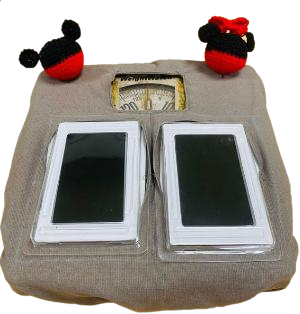
Physical height-chart prototype with a Mickey-ears silhouette and character stickers marking height increments Physical Arch Station prototype: a scale base with two footplates and Mickey and Minnie figures on top
01

Weight

A standard scale reading, tracked over time like any pediatric visit.

02

Height

A wall-mounted scale for the height-to-weight ratio parents already read.

03

Footprint & arch

Two footplates capture an arch profile in the same thirty seconds — the reading nobody used to take.

We named the device the Arch Station and paired it with BMIF, a companion app that turns three readings into something a parent — and eventually the child — can actually understand. The Arch Station brings three familiar measurements into one check-up, adding the reading traditional pediatric screenings miss.

06 — Designing the follow-through
Arch Station Reading BMIF Action

A reading is only step one.

BMIF exists so a flagged footprint never dead-ends into worry. Every screen after the result points toward something the family can actually do.
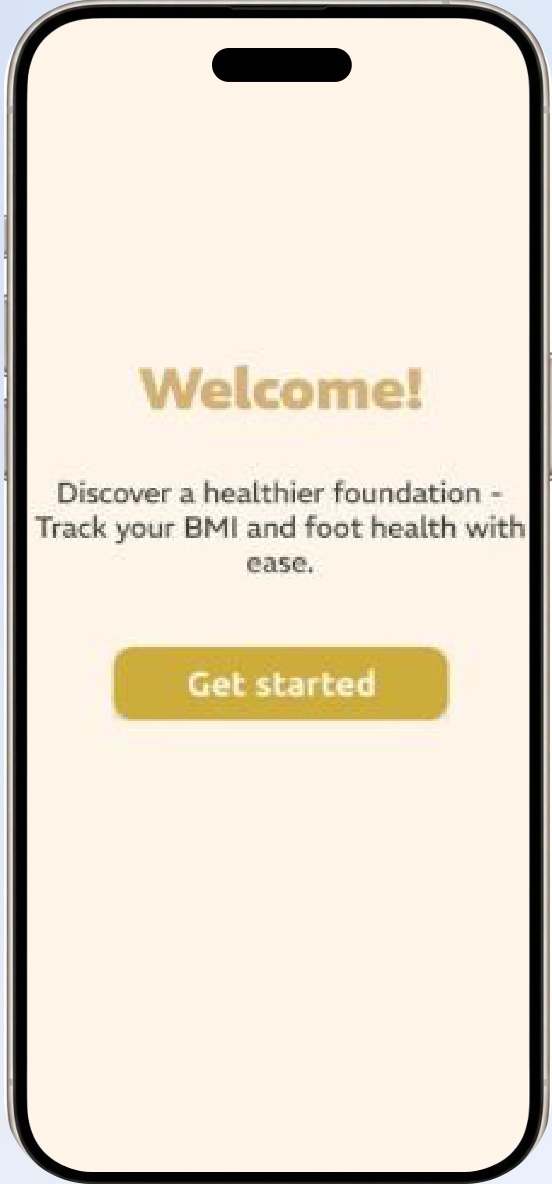
BMIF welcome screen
Welcome
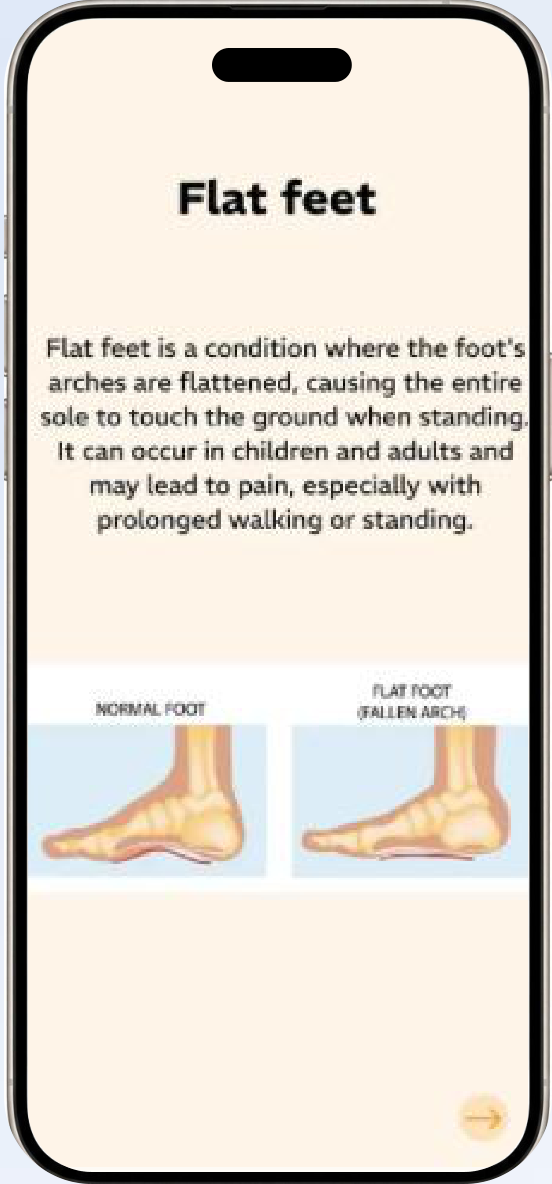
BMIF screen explaining flat feet
Understand
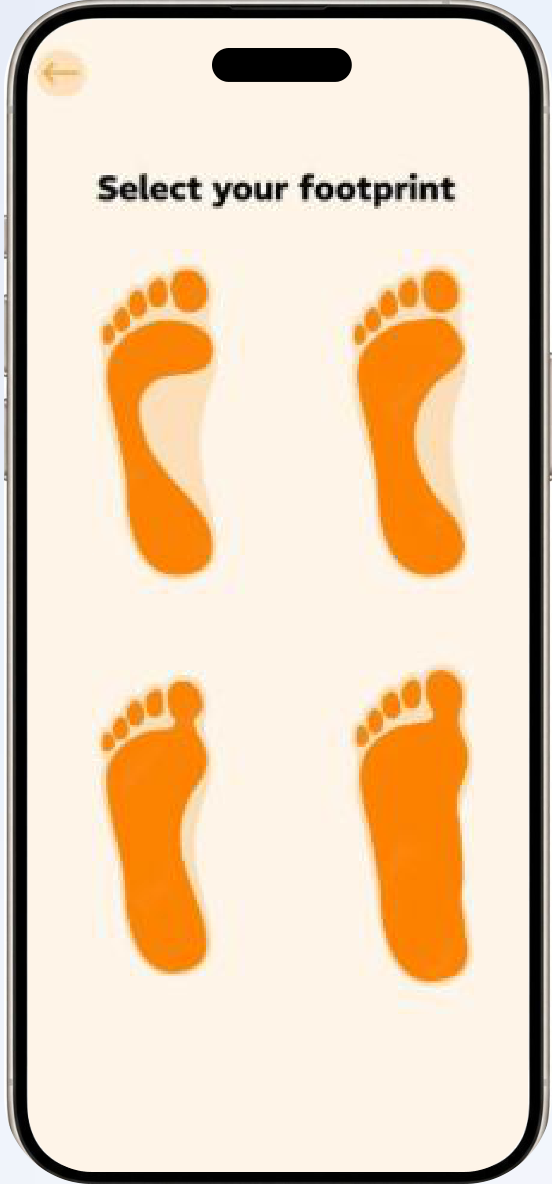
BMIF footprint selection screen
Select footprint
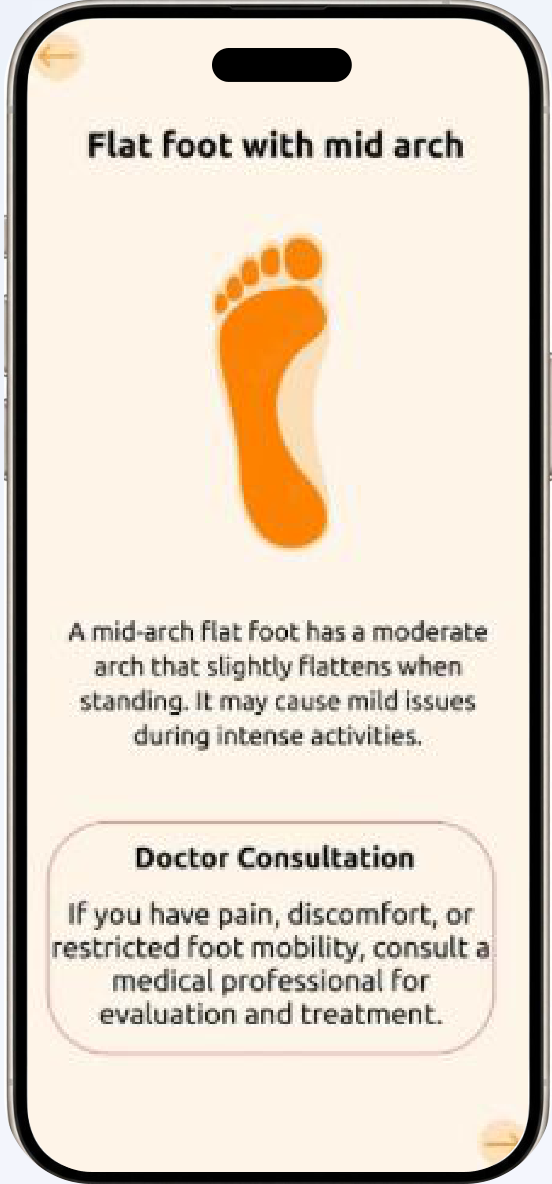
BMIF result screen showing a mid-arch flat foot
Result
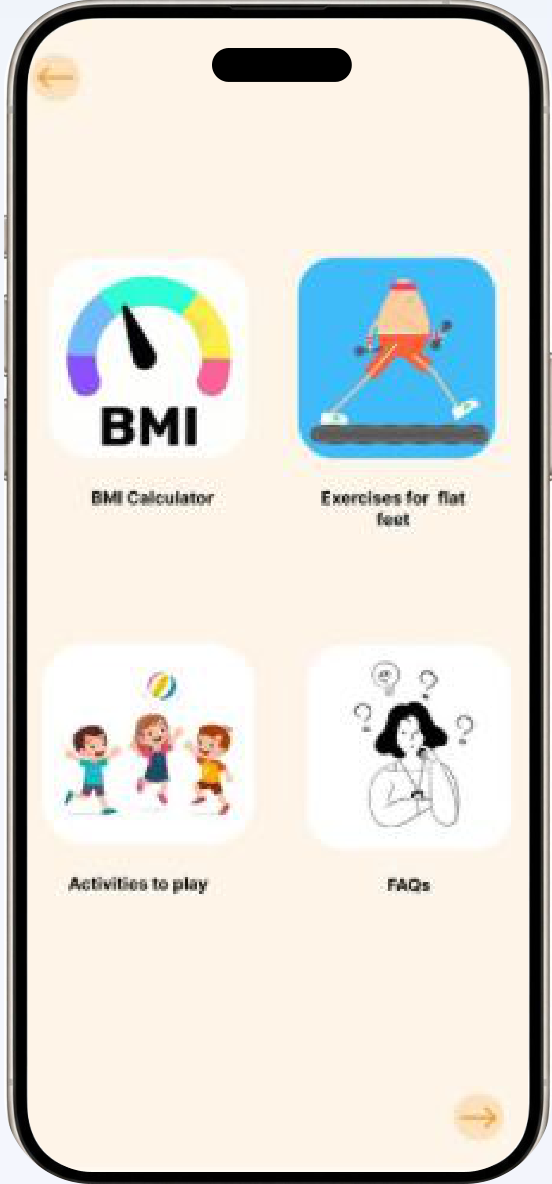
BMIF hub screen with BMI calculator, exercises, activities, and FAQs
Explore
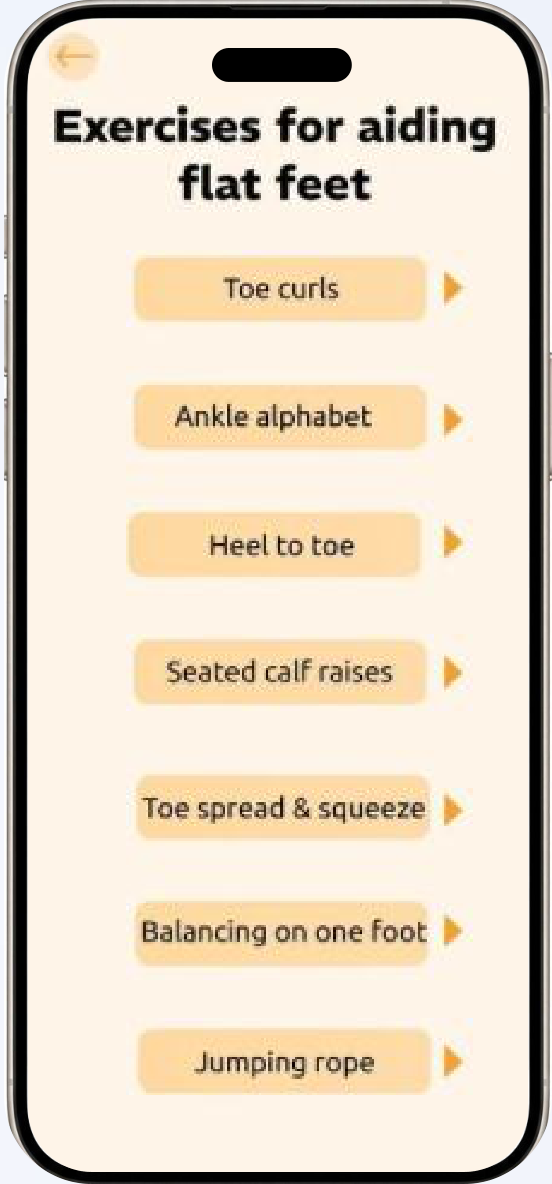
BMIF list of exercises for aiding flat feet
Pick an exercise
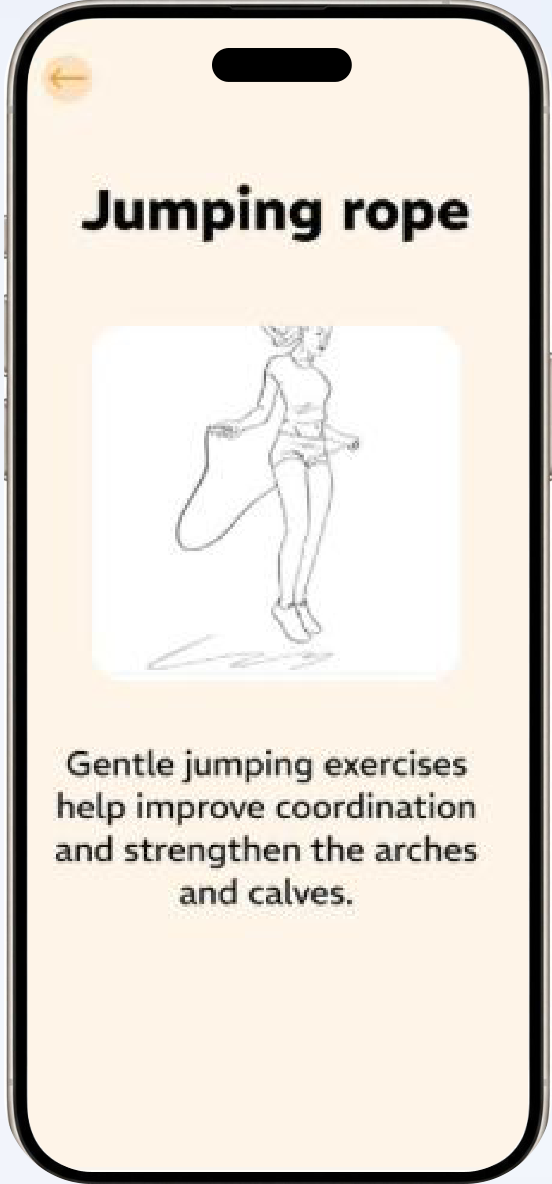
BMIF exercise detail screen for jumping rope
Move
07 — Extending the experience

From diagnosis to daily movement.

A screening result is only valuable if it leads to consistent action. The therapy mat extends the digital experience into physical play — helping children strengthen their feet through guided, engaging activities.
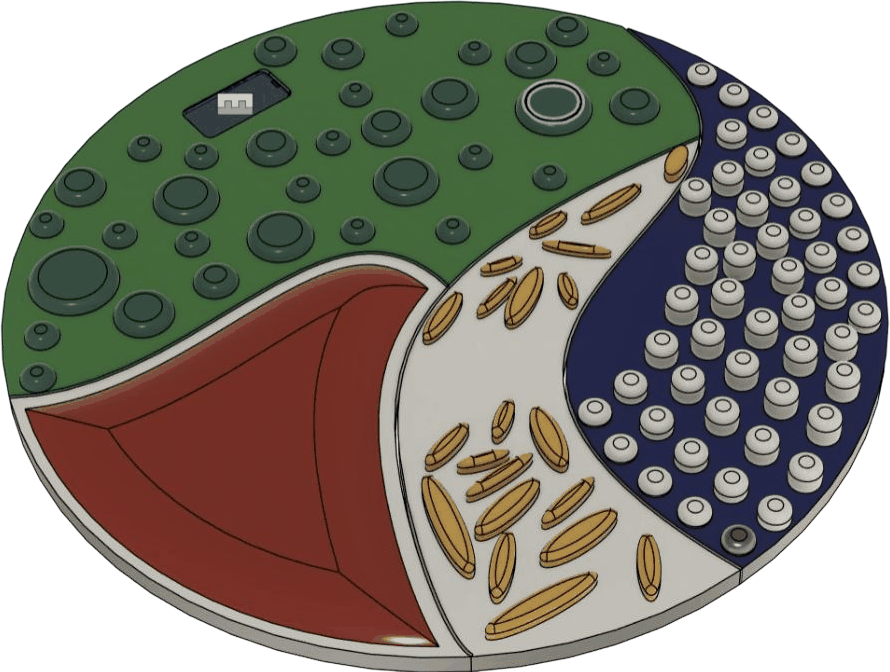
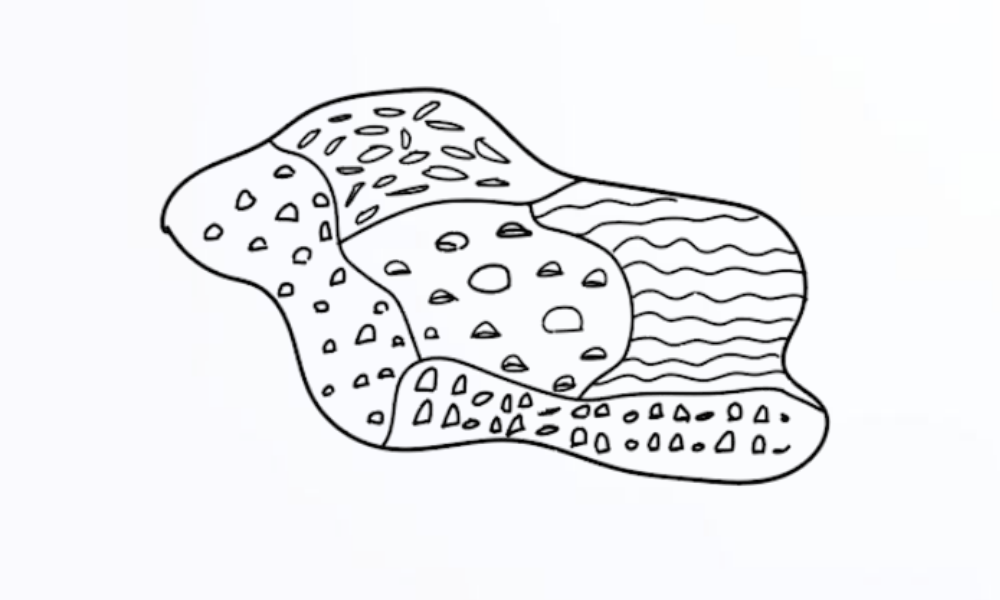
Therapy mat design with four zones of varied textures: raised domes, ridges, smooth beads, and studs
Arch Station
Screen
BMIF
Understand · Act
Therapy Mat
Move
08 — What worked, what’s next

A prototype, and an honest list of questions.

Strengths

  • One device replaces three separate check-ups families already do.
  • Health insights delivered in language a parent, not a clinician, can use.
  • Familiar, low-friction format needs no new habit to adopt.

Open questions

  • Manufacturing cost and long-term calibration accuracy.
  • How rest, recent exertion, and individual fitness affect a single reading.
  • Whether the device should be sized for clinics, schools, or the home.

Where it goes from here.

Longitudinal health-tracking

Printable visit summaries

Multi-child profiles